Do You Know Your Core Values? I Didn’t — Until I Read This
Do you know what your core values are?
Until recently I couldn’t have given an answer. I’d never even considered it. That changed when I picked up a self-improvement book I wouldn’t normally gravitate toward — The Way of Excellence by Brad Stulberg, an American writer and coach. The subtitle promises guidance toward “true greatness and deep satisfaction in a chaotic world.”
What caught my attention wasn’t the promise of greatness though. It was the book’s focus on finding meaning and direction in our “demanding, distracting, and fad-driven lives.” That hit home. I spend much of my time juggling a career in science alongside a side hustle in adventure journalism, constantly switching gears, chasing deadlines, and trying not to lose focus.
I’m not going to summarise the book’s 19 chapters. Instead, one idea stayed with me. Stulberg defines excellence in a refreshingly grounded way without making it sound like an unobtainable high performance concept.
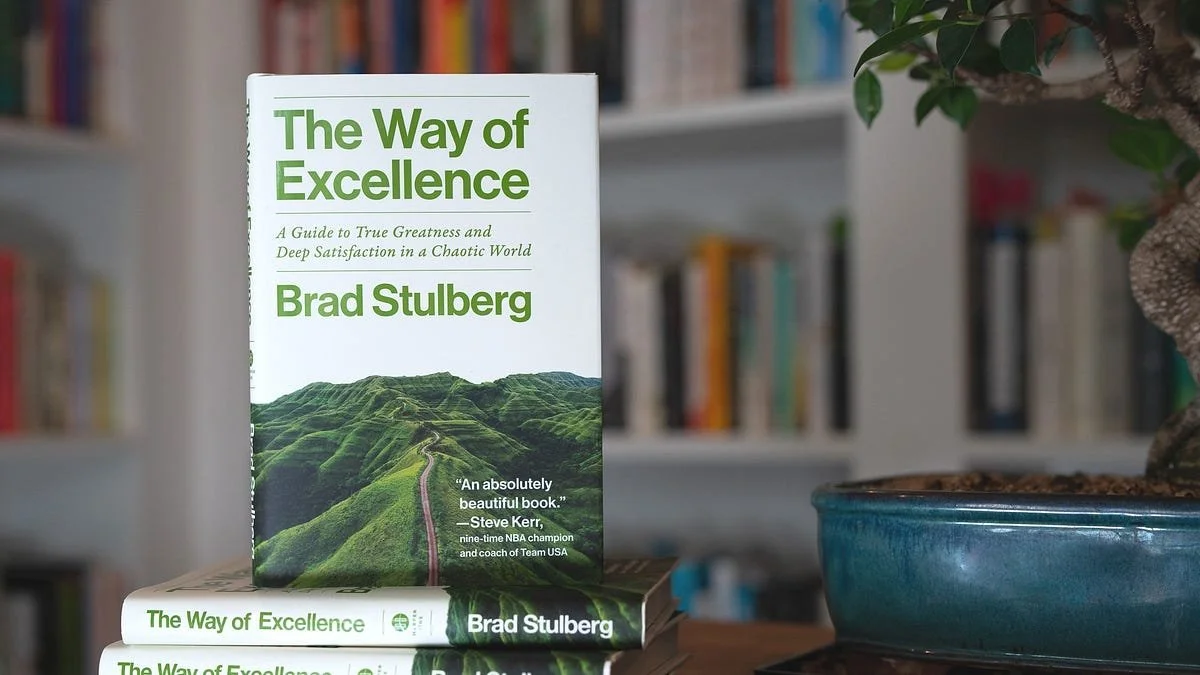
Photo: Brad Stulberg
Rethinking excellence
“Excellence is involved engagement in something worthwhile that aligns with your values and goals.”
That framing really struck me. Excellence isn’t about outperforming others and being the best all the time.
Stulberg also writes that “Excellence asks that we spend our time and energy in alignment with our values.” Our values he states represent “our guiding principles, the attributes and qualities that matter to us most.”
Knowing your values means that you can then evaluate how you spend your time. If you align your behaviours with your values then Stulberg argues that is true success.
This idea echoes with what James Clear describes in his book Atomic Habits: “your habits are how you embody your identity”. Clear goes onto argue that you can’t keep good habits up unless they align with your identity and who you want to be. Or in other words, your core values.
Defining my values
So I decided to identify mine. With a few prompts from Stulberg, I drafted a list of 15 core values: Health, Craft, Family, Adventure, Authenticity, Consistency, Quality, Sustainability, Community, Excellence, Learning, Friendship, Optimism, Practice, and Happiness.
They’re not necessarily entirely who I am now, but instead who I would like to be more like in future.

Five core pillars
Then I stepped back and looked for patterns. The fifteen values naturally clustered into themes, and I asked ChatGPT to help refine them a little further, and this is what I was left with.
Well-Being & Vitality — Living well physically, mentally, and emotionally
Health, Happiness, Optimism, Adventure
Adventure belongs here because it energises me and makes me happy.
Mastery & Craftsmanship — Commitment to doing things well and improving skill
Craft, Quality, Excellence, Practice, Consistency
This reflects discipline, standards, and pride in work.
Growth & Development — Expanding abilities and perspective
Learning, Sustainability
Sustainability represents long-term thinking — growth that endures rather than burns out.
Relationships & Belonging — Meaningful connection and shared life
Family, Friendship, Community
This cluster of values centres on social connections, support, and shared experience.
Integrity & Self-Alignment — Being true to yourself
Authenticity
Authenticity stands strong enough to anchor its own category — influencing every other value.

A mission statement
These could probably be refined even further into three themes of living well and healthily, a commitment to mastery, and building meaningful connections. Or as ChatGPT told me with a draft personal mission statement:
Live fully. Master your craft. Love your people.
I didn’t expect a self-improvement book to prompt this kind of clarity. But taking the time to think about my values has shifted how I think about what behaviours to practice in my day-to-day life. Having this clarity I think will help filter out which opportunities to chase and which to say no to, and reduce some of the stress of this chaotic world.
Now I’m curious. Do you know what your core values are?
